I mentioned in yesterday’s email that you can write an article in 30 minutes or less.
I also mentioned that you could and probably should repurpose that article to give you more web properties to attract visitors.
Today I’ll give you some ideas about how to repurpose your content.
You can export directly to PDF if you write your articles in Word, Pages, or most other desktop writing tools.
Failing that, you can use the print function to print to a PDF.
There are also many free tools or websites that allow you to create a PDF from anything you have done.
Make sure you have links to your main site in the footer of your document.
You can break up your document into short paragraphs and paste them into PowerPoint, Keynote, or another slide creating tool on your desktop or online.
Create a voice-over file at Amazon Polly, or you could read it yourself.
Create a video from your slideshow and audio.
Break out the audio to an audio-only file.
Create a Tweet summary or a highlight of the article.
Make a Facebook post of a summary.
Now you have seven pieces of content to post to as many sites as you can find, or you can contract several people on Fiverr to post them for you.
For your seven pieces of content, you should be able to get 70 to 100 postings.
That might cost you around $35 on Fiverr.
You can do all the posting yourself and save that money, and you should if you are starting out and not making any income yet, but once you begin getting sales, those are the things to outsource.
You can do other things, but that’s a great start.
Regards, Brent.
P.S. The 4-hour work-week is not possible until you have a decent email list and don’t have to be concerned about where you’re going to get the traffic or sales.
Before then, though, you’ll need to focus on building up your email list of buyers.
To do that, you’ll need to have a good landing page, an offer that’s valuable to your visitors, and a low-cost front end product.
A checklist for a niche is a good lead magnet followed by a low-cost product related to the checklist, usually by giving more details on how to use the checklist.
Your follow-up emails give added information about how the checklist helps and the benefits of the additional information.
The best free platform to integrate the email list, the landing page, the sales page, the product delivery, and the tracking is at LeadsLeap.
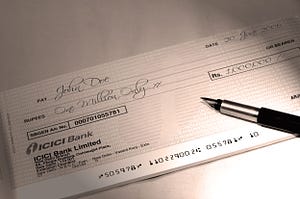
The product for sale cost $100, which had the buying power of around $1.2k in today’s dollars.
In a matter of weeks, the sales reached 18,321 orders which is a smidge over $1.8 million, the equivalent of over $13 million today.
Remember that these sales had to come in by mail accompanied by a cheque or mail order.
These were no impulse buys such as we see online, the sales letter was probably read over and over before the decision to post the money to the Franklin Mint was made.
Now that’s a powerful sales letter.
Remarkably, it did so with just one page of copy — nine short paragraphs comprising 394 words.
This is a sales page that you should have in your swipe file because there are some potent phrases included that you can use today.
The trouble is that you are unlikely to find this particular sales letter anywhere online, except in two places.
The link in the email I got this morning and the members’ area of
Since you are probably not on the other email list and this is valuable information for any aspiring marketer, such as yourself, this email is the only place you’ll find the link.
I’ll make the sales letter available to everyone in the substack readership for a limited time, but I will put it behind the subscribers-only wall in a day or so.
It would pay you to read it now because delaying may mean you neglect to get back to it before it gets hidden.
When you are trying to get any page ranked, you’ll need to have at least one link to it, or the Google bot won’t find it.
That single link could be in your sitemap, or you could paste it into the Google Webmaster tools.
I found that one of the most effective ways to get the Google bot racing across the web to my latest page is to send an email to one of my Gmail accounts with the link in it.
Other places you can insert it to get the attention of the bot fast is
on a page in a blogger blog,
on a page in a Google site,
in a pdf uploaded to drive,
in a spreadsheet in Google sheets,
a page in Google docs,
a description with a YouTube video.
These are all places that the Google bot watches closely for new data, and anew link is new data.
I call this jiggling the web.
I relate it to a spider web where the struggles of a trapped insect attract the host spider’s attention.
The slightest jiggle gets attention fast and a rapid reaction.
But if you poke the spider with a stick, they’ll run away and hide.
It appears to me that the Google bot pays more attention to jiggles than direct pokes.
That single link won’t often rank your site very highly, but you will be on their list of places to visit.
Then, when they find your link to the same page in multiple other places, you’ll begin to get some traction and ranking points.
Reply if that does or doesn’t make sense.
Regards, Brent.
P.S. You may have read about link diversity.
This is the art of not limiting your anchor text to a few keywords.
The problem is that it can become difficult to think up new and different words or phrases for the anchor.
Sure, you can use the href, as I do in my emails, but that’s not suitable for a blog post, mostly.
You can use click here or just click, but that can look ugly as well.
So I’m sharing a web page I stole years ago with a massive list of anchor text ideas.
The website is now defunct, which means this may be the only copy in existence.
Grab it and use it because it’ll help your ranking efforts.
They could be yours or something you sell as an affiliate, but that is your only job.
It’s the customers’ job to put the information or software into action.
About 80% – 90% of your customers won’t do that, but that is not your problem.
It’s theirs, and it is not your job to push them into taking any action.
Most training and software sold in the I.M. space has some nuggets of helpful information in there because it’s not all crap.
But if the buyer doesn’t implement what they learned and perhaps modify the process to suit themselves and their target market through testing, they probably won’t get the benefit they sought.
That does not mean the product was no good.
It does mean that the customer didn’t put any effort into making it work for them.
As long as you’ve sold a product that will do what you’ve claimed on the sales page, then you’ve completed your part of the transaction honourably and ethically.
What the customer does next is on them and not your responsibility.
Happy selling.
Regards, Brent.
P.S. Are you tired of building backlinks and not getting visitors who take action on your web pages?
There is another way to get targeted visitors to your website.
There are hundreds of ways, but I’ll only talk about one in this instance.
You can take advantage of this platform with free tools, but it’s often faster to use a paid tool.
For 24 hours only, you can access the training for free.
Only via this link, no signup or credit card required.
One of my wife’s work colleagues used to call work and say she had sore eyes.
She couldn’t see herself turning up for work that day.
It’s sort of an OK excuse.
She was a courier and had to drive all day.
Another excellent excuse is that Brendan was late today because he had a headwind as he walked there.
Or perhaps Leo was late, but it’s my fault because I told him not to set his alarm. It wakes us up.
Stupid stories with no relevance to business other than we all make up stories to cover for the truth.
One sales trainer used to say that excuses were usually reasons stuffed with a lie.
When making a presentation, a salesperson’s job is to uncover the real reason the prospect doesn’t buy.
I remember being in the buyer’s position on several occasions and being highly resistant to a sales pitch.
I knew what the salesperson was doing, and I wasn’t buying.
My wife, who was with me both times, would have bought on the spot and struggled with my attitude, but I didn’t relent.
The reasons for not buying were financial in one case, and the other was that I sold a similar product, and it would have been stupid to make that purchase.
In neither case did the salesperson dig deep enough to get the real reason.
Online though, you don’t know what reason your visitor has for not buying.
That means that you need to think hard about what you’re offering and what possible reasons the visitor could have for not buying.
Then in your sales letter or video, you need to cover those reasons and eliminate them in the visitors’ minds.
The better you do that, the better your sales will be.
Regards, Brent.
P.S. Making a living online requires you to have certain things in place.
You’ll need a product to sell,
a group of people to sell to,
a way to collect payment,
a way to get your offer in front of those people.
There are hundreds of ways to fulfil those requirements, both free and paid, so there is no excuse not to have them in place.
If you don’t have most of that in place now, there is a free way to get started that has almost everything you need.
It has:-
An email autoresponder.
A page builder.
A tracking system.
A funnel builder.
A form builder.
A way to deliver some products.
All you need outside of that is a way to get paid.
I suspect that any payment system you can use in your country will work with some fudging.
In the 3D world, where the food comes from, businesses put up billboards, advertise in papers and magazines, advertise on radio and T.V., posters and displays on shop fronts.
There are others, but that’ll do for illustration.
In the digital world, they do similar things.
They run ads on platforms that might bring them traffic.
They still advertise in magazines and papers, on radio and T.V. and put up shop fronts in the form of websites.
Many companies spend a lot of money and get a great return without knowing exactly which ads or platforms worked for them.
Mainly because they get so much data as feedback that they cannot process it all accurately.
I suspect that most of them do something as stupid as this.
Amazon advertises on Google for the keyword Amazon.
Amazon ranks #1 for the keyword Amazon as you would expect.
I bet they get masses of clicks on their ad at the top of the page when they could not target that keyword and get masses of clicks on their page link, which is just below their ad.
They probably pay Goole handsomely for something they would have got for free.
These geniuses in marketing haven’t caught on to the fact that millions of people type Amazon into the search bar and click the first result that looks like the Amazon site.
Millions of people don’t type amazon.com into the URL bar, they search for it instead.
Amazon gets loads of data about how many clicks they get without understanding that they are wasting their money.
You don’t have billions of dollars to play with, so you have to be smarter than those in the Amazon marketing department.
Fortunately, that isn’t hard.
You need to be smart enough to set up split tests and use a good tracking tool.
Based on figures from 2020, 64% of Internet traffic, your website visitors, are bots.
That number will be higher now, but I couldn’t find a more recent number.
The most disturbing number is that over 30% of those boys are malicious.
They are trying to hack your websites, scrape your email address or lure you into giving out your login details or other private information.
Some of these bots are so good that they behave similarly to a human visitor.
They can fill out forms slowly, so it looks like someone is typing, even backspacing and correcting typos.
How do I know?
I can write this type of code.
I don’t do it, but I know how and have tested the code to know it works.
They can even solve those stupid captchas that some sites like to use as “security”.
But bots will never buy anything from you because they have empty pockets.
They can and do make transactions online, but these are usually trading shares and cryptocurrencies.
They fill in surveys and polls to alter the results to their preferences.
In short, you cannot trust that any result from a public form is the valid opinion of humans as it’s probably not.
The proliferation of bots is why you must use double opt-in for all your email lists because bots don’t usually have an email account.
They can, and they can open, read emails and click links, but most don’t.
Most email marketers who say not to use double opt-in because your sign-ups are lower are correct.
You’re only getting the 30% that are humans, not the other 70% that are bots that won’t open any of your emails or buy anything from you.
Regards, Brent.
P.S. After an interesting discussion on another forum about the actual search results for any keyword, I think I have proved that your competition for any keyword is less than 500 pages.
This is how you find out.
Search for any keyword.
Scroll to the bottom of the results page, click the page number on the right, and keep doing that until Google stops showing you more results.
You’ll probably stop at around page 14 and less than 280 sites.
There will be a link in the text at the bottom to include all the pages in a search.
Click that and repeat, leaping through the pages.
This one will stop at around page 49 and less than 500 pages.
Those results are the only pages that Google thinks are worth ranking anywhere in their search results pages.
Your competition is not more than 1 million pages.
It’s less than 500.
Remember, Google is an advertising network, so they lie to you about your competition, so you’ll pay for ads instead of doing simple on and off-page SEO.
Most of us don’t understand SEO too well and don’t know what to do to improve our sites.
I was crap at SEO, so I understand where you’re coming from, but I found a simple solution.
Built into Frase is a tool that identifies how to improve the SEO on your page and will show you exactly what to do to improve your ranking.